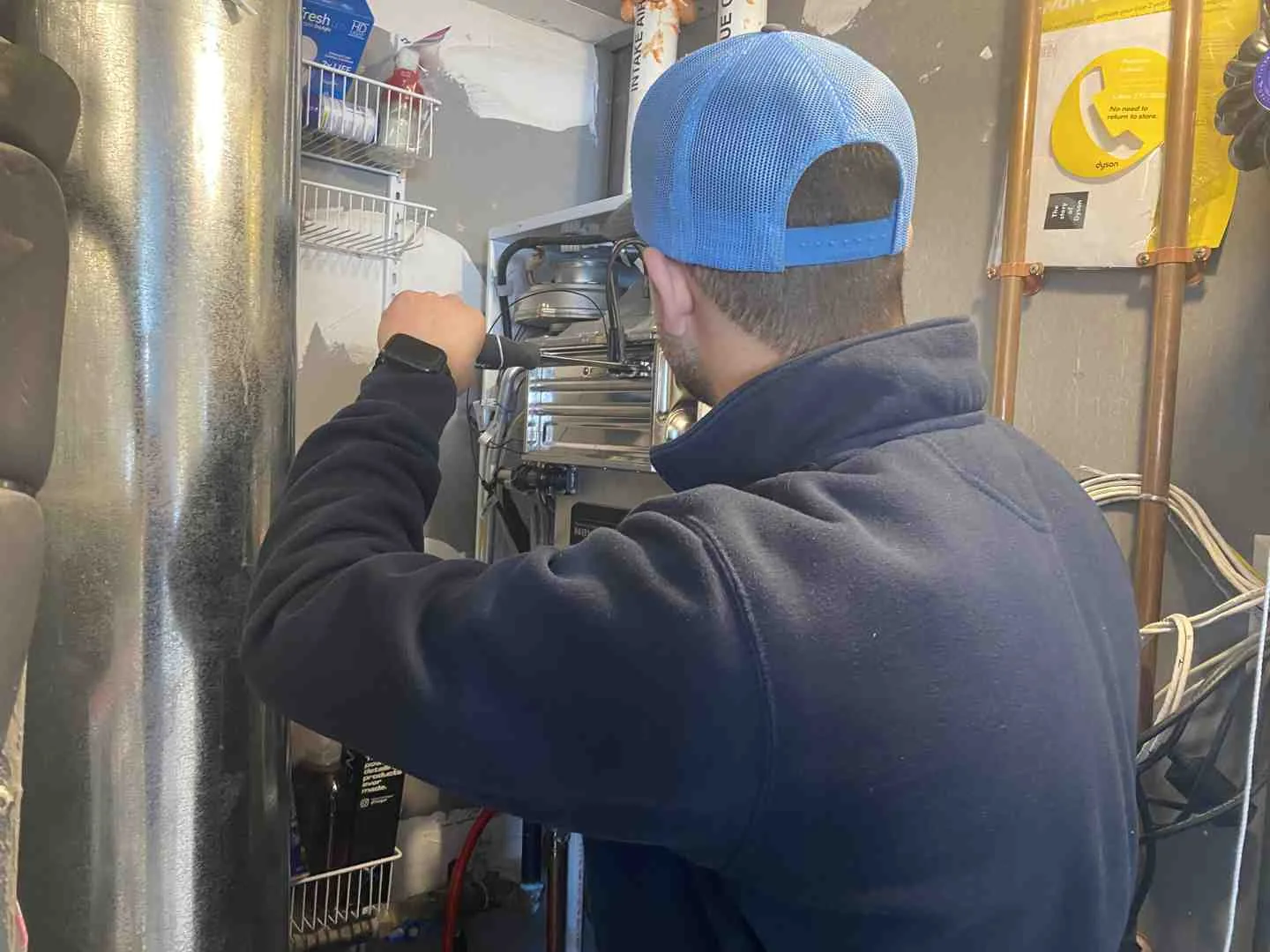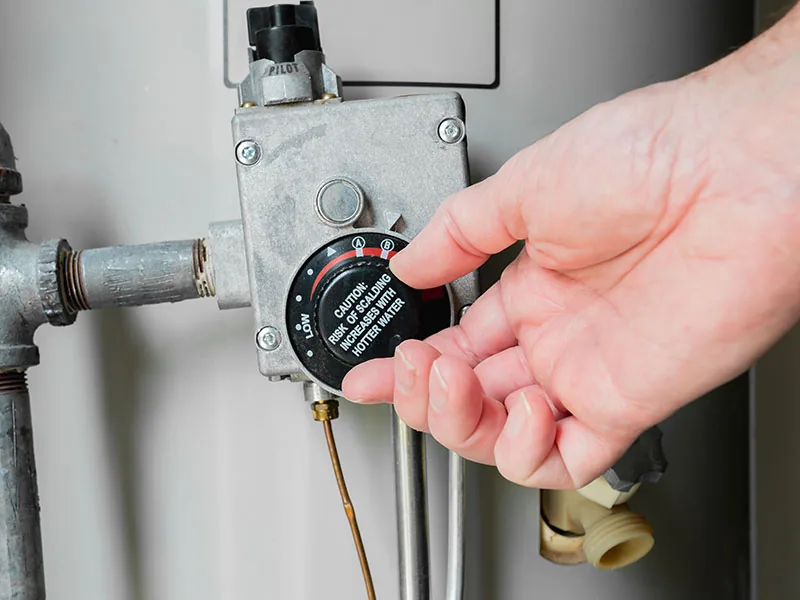
Set your water heater to 120°F. It’s the sweet spot recommended by the U.S. Department of Energy — hot enough to prevent bacteria like Legionella and comfortable for daily use, but low enough to prevent scalding and save energy (you lose efficiency for every degree higher). 140°F+ risks serious burns in seconds.
Why 120°F is the recommended setting
- Scald protection — water at 140°F can burn in seconds, especially for kids and seniors
- Energy savings — lower temp means lower standby losses and bills
- Bacteria control — 120°F is warm enough to keep Legionella in check
- Less sediment & wear — running cooler is easier on the tank
When you might go a little higher
Some households with dishwashers without internal heaters, immune-compromised members, or recurring sulfur odor may briefly use ~130–140°F. If you do, consider anti-scald mixing valves at fixtures for safety.
How to adjust the temperature
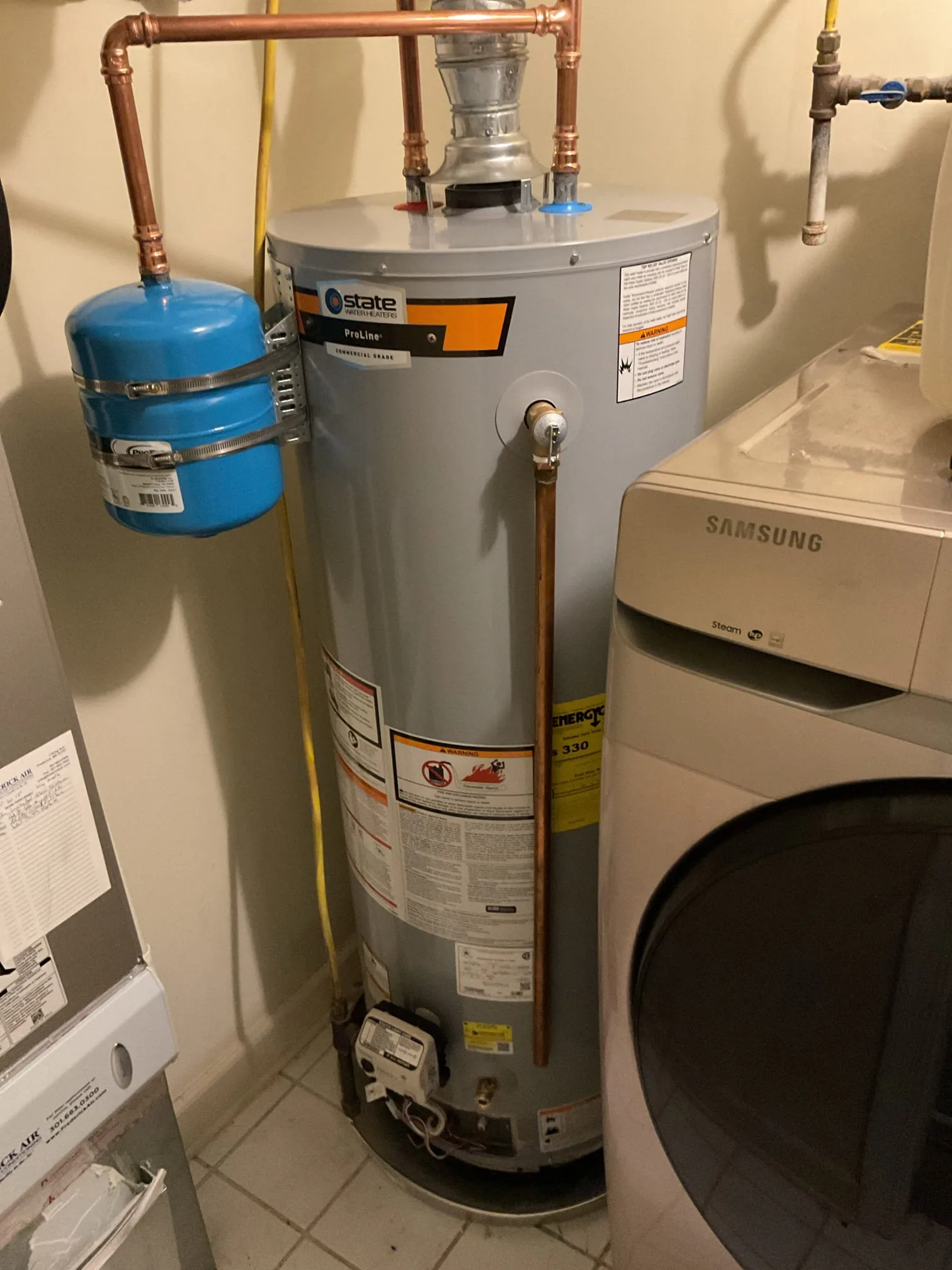
- Gas: turn the control dial (often marked Warm–Hot) toward ~120°F.
- Electric: turn off the breaker, remove the access panels, and set both thermostats to ~120°F (or have a pro do it).
- Wait a few hours and test at the tap.
If the water stays too hot after lowering the dial, the thermostat may have failed — see water too hot.
FAQs
What is the ideal water heater temperature?
120°F — the Department of Energy’s recommendation for balancing safety, comfort, energy savings, and bacteria control.
Is 140 degrees too hot for a water heater?
It increases scald risk (burns in seconds) and energy use. Some households use it for specific reasons, but 120°F is recommended for most.
Does lowering the temperature save money?
Yes — a lower setting reduces standby heat loss. Dropping from 140°F to 120°F can noticeably cut water-heating costs.